
27 de janeiro de 2026
Paraná Ag Aviation Working Group Sets 2026 Priorities
Coordinated by Sindag, the group includes representatives from the Federation of Agriculture of the State of Paraná (Faep), the State Agricultural Defense Agency (Adapar) and CREA-PR, among other institutional partners
The Paraná State Agricultural Aviation Working Group has outlined its 2026 roadmap, built around three core pillars: awareness, training, and innovation. The plan was presented during the group’s first official meeting, held online last Friday (23).
The initiative is coordinated by the Brazilian Union of Agricultural Aviation Companies (Sindag), through its Institutional Relations Advisor Divaldo Custodio Maciel. According to Maciel, the meeting brought together industry representatives, technical organizations, and institutional stakeholders to structure a long-term agenda focused on operational safety, professional training, and improved dialogue with other agricultural sectors.
Agricultural aviation plays a strategic role in Brazil’s large-scale farming regions, supporting crop protection and precision application operations across vast production areas.
GUIDES
One of the main projects already underway is the development of a Best Practices Guide for Coexistence between Agricultural Aviation and Beekeeping. The document is being prepared collaboratively, with participation from agricultural aviation specialists, agronomists, and representatives from the beekeeping community. The goal is to strengthen communication between aerial applicators, farmers, and beekeepers by establishing clear guidelines on advance notification, application windows, and risk mitigation measures.
“This is not just about producing an informational document,” Maciel said. “The goal is to create a practical tool that can actually be implemented in the field, supported by an outreach and implementation plan aimed at the key audiences involved.” The guide is expected to be released in 2026, preferably during a major agribusiness event in Paraná.
The same approach will be applied to a second publication currently under development: a Best Practices Guide for Coexistence between Agricultural Aviation and Sericulture. The working group has already initiated contact with representatives from the silk production sector and specialized technicians to ensure the material reflects real operational needs and is built through technical meetings and joint discussions.
Another ongoing project is the creation of a Guide for Agricultural Drone Service Providers, which will expand on the first publication released by the working group in October 2025. The updated guide is expected to provide deeper coverage of operational and regulatory aspects, as well as integration challenges between drones and manned aircraft — reinforcing safety culture and standardization as drone use expands in Brazilian agriculture.
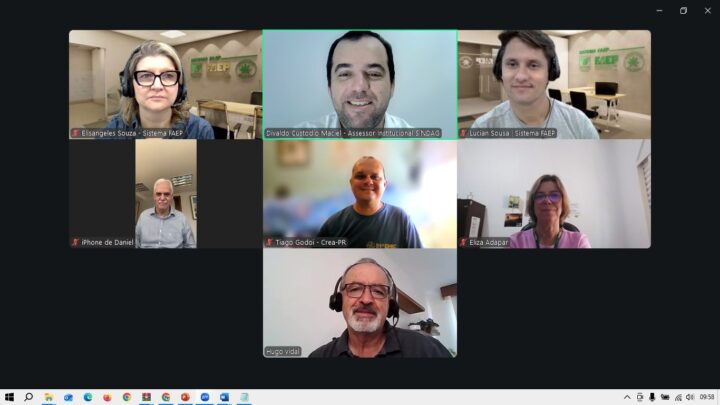
COORDINATION: The virtual meeting included representatives from the productive sector, technical entities, and institutional interlocutors
Key initiatives
Under the awareness pillar, the group is also preparing an integrated events calendar to map key agricultural fairs, congresses, and technical meetings across Paraná. Planned activities include participation in the Paraná Congress of Agronomist Engineers, as well as technical sessions within regional agribusiness events, prioritizing panels, lectures, and workshops.
In the area of training, one of the proposals is to develop a qualification program for the staff of Paraná’s Regional Council of Engineering and Agronomy (CREA-PR). The initiative aims to align technical, operational, and regulatory knowledge related to agricultural aviation, creating a shared understanding among inspectors, analysts, and sector professionals. The proposal is expected to involve partnerships with technical institutions and specialists.
Regarding innovation, the group is also planning the State Seminar on Application Technology, an event still in the format-definition phase. The target audience includes agronomists, agricultural technicians, operators, industry leaders, and regulatory authorities. The seminar is expected to take place in the second half of 2026.
The group includes representatives from Sindag and the Federation of Agriculture of the State of Paraná (Faep), with support from the State Agricultural Defense Agency (Adapar) and CREA-PR, among other institutional partners. Meetings are expected to be held biweekly, with thematic discussions as each project advances.
According to Maciel, the initiative is also aligned with similar agricultural aviation working groups in other Brazilian states, creating a shared environment for exchanging best practices, developing safety-focused projects, and strengthening cooperation between agricultural aviation and the broader agribusiness community.
“Our focus is to build practical solutions, grounded in technical expertise and permanent dialogue,” Maciel said. “Agricultural aviation plays a strategic role in Paraná’s agribusiness, and this working group exists to support long-term growth, safety, and public confidence in the sector.”